Epistemology
What Do the Miracles Prove? A Vaishnava Reply to Joe Schmid
Joe Schmid was raised Catholic, spent ten years away from the faith, and became the internet's most careful agnostic. In August he returned to the Church on the strength of the miracles. Here is his argument at its strongest, and why a Vaishnava thinks the miracles establish less than his conclusion needs.
 Joe Schmid@MajestyofReason & Arjuna Consciousness, Explanation, Causality, and Religious Experience
 Adi Purusha Das, Joe Schmid, Josh WolfeThe Problem of Evil @MajestyofReason & Adi Purusha
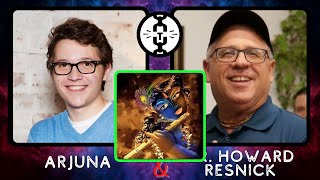 Hṛdayānanda dāsa Goswāmī, Joe SchmidDoes God Play Flute Dialogue with @MajestyofReason and Dr. Howard Resnick
 Cameron Bertuzzi, Seth HartDebate Is There Good Evidence for Reincarnation Hosted by @CapturingChristianity
On 21 August, Joe Schmid — the beloved philosopher behind Majesty of Reason — announced that he had become a Catholic. His reason was not a new argument for God. It was the miracles: Fátima, Lourdes, the Eucharistic miracles, and above all Padre Pio. He has since published eighteen hours of video making the case.
I want to do three things here. Say who Joe is and why his conversion matters, for anyone who has not been following. Lay out his argument at its full strength, in his own words, including what he said on my channel in the years before. And then explain why a Vaishnava — someone from a tradition that is full of wonders and puts no evidential weight on them — thinks the miracles are real and still do not prove what Joe needs them to.
Two questions run through this piece, and I will come back to both of them by name. One is about the data. The other is about what the data means.
The first: is the apparent uniqueness of the Catholic record real, or is it an appearance created by social factors? Do these things happen only in Catholic environments, or is it that Catholic apologists do the work on miracles while Hindu apologists find them uninteresting and beside the point for settling theology — and that language and geography mean someone like Joe hears about the Catholic cases and never the Hindu ones?
The second: once the data is in, what theology makes sense of it? Is there a broader theology that accounts for all of it — the Catholic miracles, the non-Catholic ones, the reincarnation cases, the silence at Zeitoun — more satisfyingly than the one Joe has adopted?
I use "broader" descriptively, not to boast. A narrow theology is one that has to explain away most of the world's religious data: the wonders of every other tradition are frauds or demons, their saints deluded, their scriptures worthless. A broad theology is one that predicts the data and can say what it is for. The second is more intellectually respectable than the first for the same reason a physical theory that predicts the anomalies beats one that has to dismiss them. That is not a boast. It is what a better theory is.
1. First, the man
Joe Schmid has been one of the best things to happen to online philosophy of religion. The level of rigour, honesty and charity he brings to online and academic philosophy of religion is very rare. He goes to great lengths to never sound condescending, he takes the time to understand his interlocutors, and he spares no effort in addressing them with detailed responses.
If you have never heard of him: Joe runs a YouTube channel and blog called Majesty of Reason, and he is a PhD student in philosophy at Princeton. For most of the last decade he was the internet's most careful agnostic. He would take an argument for God's existence — the contingency argument, the Kalam, psychophysical harmony — and work through it for hours, steelmanning it better than most of its defenders, before explaining exactly where he thought it broke. Christian philosophers who disagreed with him almost always liked him.
He has been on my channel four times. In November 2020 we talked about consciousness, causation, and whether religious experience can justify belief. In June 2021 he debated the problem of evil with my friend Akshay Gupta. In February 2022 he sat down with Howard Resnick — Hridayananda Das Goswami, one of the senior scholars of my tradition — for a conversation we titled Does God Play Flute?, about whether God could have a personal form. And in May 2023 he came on to react to Philomena Cunk, which was mostly just fun.
When someone like that changes his mind about the biggest question there is, people pay attention.
On 21 August 2026 he changed his mind. The video was titled I just converted to Catholicism. Here's my story, and it opened without ceremony: "Big news. God exists. Christ is Lord, and he established the Catholic Church."
2. His journey, in his own words
Joe was raised Catholic. He left in high school, first for atheism and then for agnosticism, and the reason he gives is one I have heard from him directly. When he came on to debate the problem of evil in 2021, his entire opening statement was built around what philosophers call evolutionary animal suffering: hundreds of millions of years of predation, parasitism, and starvation before a single human being existed to make sense of any of it. His argument was Bayesian and clean. That kind of world, he said, is much less surprising if ultimate reality is indifferent than if it is a loving God. I did not agree with him, but it was the honest version of the argument, and it was clearly the thing that had actually moved him.
What moved him back was not a rebuttal to that argument. By his own account, the philosophical case for theism — the arguments he had spent years dismantling — eventually persuaded him that God probably exists. But that only got him to theism. It did not get him to a church, and he stayed an agnostic in practice.
Then he encountered the miracles.
In his telling, the pieces arrived one after another: Marian apparitions at Fátima, Lourdes and Zeitoun; Eucharistic miracles with blinded laboratory analyses; and, above all, the life of Padre Pio — the twentieth-century Capuchin friar who bore the stigmata for fifty years and was said to bilocate, read consciences, and heal. In February 2026 Joe spent four hours on a call with a Catholic apologist named Ethan Muse going through the Pio evidence. The next day he made an examination of conscience covering a decade away from the Church. The day after that, he went to confession.
His summary of the experience is one I want to quote exactly, because it is the whole argument in a sentence. It seemed to him, he said, "like the universe was conspiring to make it look like God exists, God is performing certain miracles, and not just miracles, but miracles that seem to vindicate distinctive Catholic doctrines." To stay outside the Church, he would have had to believe in "a conspiracy of conspiracies."
He then did something very Joe. He released three videos: a philosophical case for theism, a ten-and-a-half-hour survey of the miracle evidence, and a seven-and-a-half-hour reply to the best objections to Catholicism. Eighteen hours. Nobody can accuse him of not showing his work. And he said what comes next: he intends to build "an extensive body of videos criticising other religions." Mine is one of them. So this is not only a response; it is a preview of what he will have to answer when he gets there.
3. The argument, as strong as I can make it
Here is what Joe is claiming, stated as fairly as I can.
A miracle is an event within nature that nature cannot produce. Some miracles are what he calls vindicatory: they occur in a context that makes it look as though God intends to authenticate a specific person or a specific doctrine. Padre Pio's stigmata are vindicatory in this sense because, in Joe's words, Pio's charisms and private revelations "implicitly presupposed, explicitly affirmed, or publicly vindicated Catholic doctrines and devotions." Fátima is vindicatory because the apparition identified herself as Our Lady of the Rosary, and the rosary is distinctively Catholic in origin and substance. The Eucharistic miracles are vindicatory because the best explanation of relics like those at Lanciano is, he argues, divine vindication of the Catholic doctrine of transubstantiation — and because the distribution of scientifically verified Eucharistic miracles uniquely privileges Catholicism.
The claim is then that these vindicatory miracles cluster, overwhelmingly, in Catholicism. Not in Islam, not in Protestantism, not in Hinduism. And the best explanation of that clustering is that Catholicism is true.
Joe knows the obvious reply, and he devotes the first two and a half hours of his objections video to it. Maybe it is a selection effect: Catholicism has the institutions to investigate and document. Maybe God is accommodating, meeting people in whatever tradition they are in — I will come back to that one. Maybe the wonders are demonic. Maybe they are aliens.
Notice that Joe has just raised both my questions himself. The selection effect is the data question in his words: perhaps the Catholic record looks unique because of who does the recording. Accommodation is the interpretation question, in its weakest form. He deserves credit for putting them on the table. What follows is about what he does with them.
To each of these he gives the same two-part answer. First: none of them predicts why Catholicism specifically would be singled out, out of the thousands of sects and religions available. Second, and more forcefully: if God performs signs in confirmation of a false religion, then God is a deceiver, and once you allow that, you cannot trust any revelation at all — not even the Gospels, not even if you had watched the resurrection with your own eyes. He calls this the "awesome miraculous evidence" test. Any objection that would also stop you converting after witnessing the resurrection firsthand has, he says, gone wrong somewhere.
On other religions' miracles, he is blunt. Miracle claims exist in Hinduism and Jainism, he grants, but a claim is not a case. Mount a rigorous cumulative case with photographs, videos, and medical documentation, comparable to what he has just done for Catholicism, and then we can talk. Ethan Muse puts the same challenge more sharply: give me your closest parallel to Fátima.
And he closes his evidence video with a line worth pausing on, because it says what his case is built on. The Catholic miracles, he says, are better evidenced than the resurrection: four or five ancient sources of debated authorship and dating, against contemporaneous photographs, x-rays, sworn depositions, and blinded lab work.
That is the case.
4. The question that is not being asked
The online responses largely fit into three camps: atheists, Protestants and Catholics. The atheists say none of it happened. The Protestants say it is demonic, or that nothing hangs on it. The Catholics say the evidence is overwhelming.
Almost nobody in the room belongs to a tradition that takes wonders completely seriously and still does not think they prove what Joe thinks they prove. A Buddhist-leaning writer and a Baháʼí-curious one have made related points on Substack. No Hindu has.
What follows is a take on all this from Eastern theology, which I think brings something fresh and valuable to the table. But before I get to it, one Protestant has already come close. His name is Seth Hart.
Seth has a doctorate from Durham, teaches theology at John Brown University, and has been a regular on my channel for years. He has debated reincarnation and the problem of evil with me and with Akshay. He knows the Eastern material better than almost any Christian I have met. On 29 August he published a short essay called The Glaring Problem with the Argument from Miracles, and it begins with a case that I suspect most of Joe's readers have never heard of.
In 2010, a team of thirty-five researchers at India's Defence Institute of Physiology and Allied Sciences placed an eighty-year-old ascetic named Prahlad Jani under continuous observation for fifteen days. Jani claimed that the goddess Amba sustained him without food or water. Under CCTV, with a large multidisciplinary team, he neither ate, drank, urinated, nor defecated for the entire period, and his bloodwork showed none of the metabolic signatures of fasting. It was the second such study; the first, in 2003, had produced the same result.
Seth is careful. The results were never published in a peer-reviewed journal. Jani was allowed to gargle and bathe. There were moments off camera. He does not claim the case is proven. What he claims is that, judged by the standard now being applied to Padre Pio — controlled conditions, trained observers, documentation — Jani's case is at least as good as most of the Catholic ones, and better than many.
Then he asks the question. What does the Catholic do with it?
He cannot accommodate it: the power is attributed to a goddess. He cannot dismiss it without special pleading, because it was gathered under exactly the kind of conditions he wishes the Catholic cases had. So he must say it is demonic. But if inedia in a Hindu ascetic is demonic, what about Catherine of Siena, Therese Neumann, and the other Catholic inediacs whom Rome has treated as saints? Benedict XIV once commissioned the medical faculty at Bologna to investigate them. Open the gate for one wonder to be diabolical and, as Seth puts it, the gates of Hades burst wide.
His argument, in short form, is this. If miracles that seem to validate a religion warrant belief in it, and such miracles occur outside Christianity, then either the premise is false or you are committed to something other than orthodox Christianity. The only remaining option is to show that every non-Christian miracle fails the standard Christian miracles meet. "As far as I am aware," he writes, "we have not come close to this."
Seth is a Christian who believes in miracles. He is not trying to get rid of the argument. He is trying to get the people making it to notice what it costs.
5. How a Vaishnava sees a wonder
Here is where I can add something the Catholics, Protestants, and atheists cannot.
My tradition — Gaudiya Vaishnavism, the tradition of the Bhagavad-gītā and the Bhāgavata Purāṇa, the tradition most people know through the Hare Krishna movement — is full of wonders. (I will say "wonder" for any event that looks miraculous, so as not to prejudge what produced it; "miracle" is Joe's word, and it already carries his answer.) Its scriptures are full of them, its saints are credited with them, and its living communities still report them: people who levitate, who go without food for decades, who are seen in two places at once, who read hearts, who heal. This is not a tradition short of the kind of thing Joe is impressed by.
And the tradition does not weigh it at all when assessing theological claims.
That is not a dodge invented to deal with Joe. It is a considered position stated in our root texts. Patañjali's Yoga Sūtra — the foundational text of the yoga tradition — lists five sources of supernormal powers: birth, herbs, mantra, austerity, and meditative absorption (4.1). Five. One of them is pharmacological. Another is simply the body you were born in. The same text then says that the powers which arise in the outward-turned mind are obstacles on the way to the real goal (3.37). The Bhāgavatam's saints treat mystic power the way a serious monk treats money: real, sometimes useful, and a trap.
The reason is simple. If wonders can arise from five different sources, only one of which has anything to do with devotion to God, then a wonder on its own cannot tell you which source produced it, and so it cannot tell you whether the beliefs of the person it happened to are true.
This exposes a gap in Joe's argument. On one side is the miracle: Padre Pio's wounds, the sun over Fátima, the tissue in the monstrance. On the other side is the doctrinal commitment: that the Catholic Church is what Christ established. Nothing in the miracle itself gets you from the first to the second. What bridges the gap is an interpretive lens — a set of prior beliefs about what God is like and what he does with signs — through which the miracle is read as an endorsement. Joe reads his cases through a Catholic lens, and through that lens they do look like endorsements. But the lens is not something the miracles establish. It has to be brought to them. And the question of which lens to bring is exactly the question at issue. I will argue below that the Vaishnava lens is the better one, because it can read every one of these cases, and the non-Catholic ones as well, without having to declare any of them fake.
Joe's argument depends, at its root, on a premise he never states because it is invisible from inside Christianity: that God authenticates truth by signs. That is Exodus. That is Mark 16: "the Lord worked with them and confirmed the word by the signs that accompanied it." It is a perfectly respectable theological premise. But it is a Christian premise, and it is being used to adjudicate a question between Christianity and religions that reject it. When Ethan Muse says "which religion does God seem more excited about?", he is assuming that divine excitement expresses itself in signs.
The premise also has a cost that I do not think Joe has priced in. If God authenticates doctrine by signs, and God never signs a falsehood, then genuine wonders in traditions that contradict each other do not merely complicate the argument. They break it, because God would then be authenticating contradictions. Anyone who holds the premise and then discovers compelling evidence of wonders in rival traditions is forced to one of two conclusions: that God is the deceiver Joe insists he cannot be, or that there is no God who cares about us at all. That is why Joe has to say what he says about Hinduism and Jainism, and why a case like Prahlad Jani's or a sun over Bangkok is not a curiosity for him but a threat. On his premise, the only way to keep a caring God is to insist that no genuine wonder ever occurs outside the one true church.
The more measured course is not to hold the premise as fixed but to treat it as an open question — one to be revised in the light of the data and of the merits of the theologies that compete to explain it. My case is that the data does force the revision, because the wonders are there, across traditions; and that once the premise is given up, a better explanation is available: a theology that accounts for all of the data, and does so with a greater conception of God than the one Catholicism has imagined.
Krishna in the Gītā says something quite different about how he expresses himself, and about what he is trying to do when he does.
6. God is not interested in your propositions
Which brings me to the heart of the matter, to the second of my two questions — what theology makes sense of the data — and to the thing my tradition can put on the table that nobody else in this argument has put there in the same form.
This is the objection I said I would come back to. Joe anticipated it, and he answered it, and I want to be careful about what I think went wrong, because it is not like him. The accommodationism he answers is what he himself calls "generic theist accommodationism" — a vague hope that a nice God meets people where they are, held by nobody in particular, with no account of why he would or how far he would go. Against that version his replies land. But it is the weakest form of the idea, and a stronger one exists in a tradition Joe has engaged directly: he spent two hours with Howard Resnick on the Vaishnava conception of God. The accommodation that tradition teaches is not a hope. It is a doctrine, with a stated mechanism, a stated purpose, and a stated limit, and it was written down long before anyone needed it to explain a Catholic miracle.
His reply has two parts. A generic theist, he says, has no reason to expect God to steady people's faith in traditions that misdescribe him. And a God who did so would be a deceiver, which would poison every revelation and every faculty we have. The Truman Show.
Both halves are wrong for the God of the Gītā, and not because I have improvised an answer under pressure. Krishna says so directly:
"Whatever form a devotee wishes to worship with faith, I make that faith steady." (7.21) "Those who worship other gods with faith worship me also, though not according to the rule." (9.23) "As they surrender to me, I reward them accordingly." (4.11)
He goes further than that. In the second chapter he says that his own scripture, the Veda, promises svarga to people whose minds are set on svarga, and he calls those promises "flowery words" (2.42–44). Svarga is usually translated "heaven," and the translation misleads: it means the celestial realms of the devas, a temporary reward for good works, not the eternal abode of God that a Christian means by the word (the tradition calls that Vaikuṇṭha, and it is a different thing). So the point of the verses is this: the sacrificial portions of the Veda were written for people who wanted a better life in a higher world, and they deliver that, and it is not the goal. And the Gītā is explicit about how it ranks what people are doing. It ranks by the mode of nature a person's faith is in — goodness, passion, or ignorance — and says that everyone's faith is of one of those three kinds according to his nature (17.2–4). It ranks by path: work offered to God, the pursuit of knowledge, the discipline of yoga, and devotion, in ascending order. And it ranks by the depth at which God has been realised: as the impersonal Brahman, as the Paramātmā within the heart, and as Bhagavān, the person — which the Bhāgavatam calls three names for one truth, known at three depths (1.2.11). And it ranks by the object of worship: God himself, the powerful beings who administer the cosmos, the ancestors, the spirits — and each worshipper receives what he was aiming at (9.25). That last axis matters least here, since the Abrahamic religions and mine are all aimed at God himself; the differences between us fall on the other three.
Notice what the Gītā is sorting on every one of those axes. It is not sorting religions. As Howard Resnick has put it on my channel, Krishna does not talk about sectarian religions at all; he talks about types of people — the karmī who worships for prosperity, the jñānī who wants knowledge, the yogī who wants mystic experience, the bhakta who wants love of God — and every religion large enough to contain a full spread of human beings contains all four. God meets each type at the level it has reached, and the levels are ranked. That is why the tradition's position is what Resnick calls principled inclusivism: God is present in many religions, many religions are bringing people to him, and there are still rational principles for saying which understanding of him is more advanced — as there is more and less advanced mathematics, without the elementary kind being false.
The comparison is deliberate. Prabhupāda, pressed by a professor who insisted there are many religions, answered that religion cannot be many: "If God is one, therefore knowledge of God should be one," the way two plus two is four everywhere and there is no Christian mathematics. Resnick makes the same point with medicine: nobody refuses a cure because it was discovered in Japan, and knowledge of God is no more national than a cure is. What we call the many religions are one religion — love of God — received by many kinds of people at many levels. And God, in Prabhupāda's words, keeps reaching for all of them: "God's propaganda is going on in so many ways to recall all these bewildered sons of God."
A God who tells you all this about his own book is not a God who will be embarrassed to be caught steadying a Copt's faith with an apparition.
So the first half of Joe's objection fails immediately. On Vaishnava theism, God's reaching people through a variety of religions, in a variety of cultures and mindsets, is not a surprise to be explained. It is what the texts say he does: he steadies the faith a person already has, in the form that person can already worship, and he gives each path the fruit it aims at. Fátima, on this view, is what it looks like when God does that for Portuguese Catholic peasants in 1917. A Krishna vision in Vrindavan is what it looks like when he does it for a devotee there. The "why would God single out Catholicism?" argument only works against a theism with no account of religious diversity. Mine has had one for two thousand years, and it is specific enough to say which tradition is being met, in what form, and with what result.
I should say why this picture is so hard to see from inside Christianity, because it is not a failure of imagination on Joe's part. It is a consequence of a single premise: that everything has to be settled in one lifetime. If this life is the only one, and what follows it is fixed at death, then God cannot afford to meet people where they are. He has to get them to the right place now, and any sign that leaves someone contentedly in the wrong place is a sign that has failed — or deceived. On that premise, the existence of many religions can only be bad news. Most of the people who have ever lived died inside a religion other than the true one, and if this life was their only chance, then God either failed to reach them or chose not to. There is no third reading available. Extend the timescale and the picture changes. If souls are on long journeys, and if some of those journeys cannot be made shorter because of facts about the soul making them — what it wants, what it can bear, what it is ready to see — then a God who meets each traveller at the stage they have reached, in the form they can receive, is not neglecting them. He is doing the only thing that can be done for someone who is not yet ready for more. Religious diversity is what a patient God's work looks like across many lives. It cannot be understood if hell waits for everyone who has not got far enough by the end of this one.
The second half — deception — is the one that matters, and answering it requires saying what a religion is for.
Think about how physics is taught. A fourteen-year-old learns that the atom is a nucleus with electrons orbiting it like planets. That is false. Electrons do not orbit. The teacher knows it is false, teaches it anyway, and is not lying, because the Bohr model is what a fourteen-year-old can hold, and holding it moves her toward the thing that is true. Two years later she learns Newton's gravity, which is also false, and is also taught deliberately, and is also not a lie. Resnick makes the same point with mathematics: a society has to teach the arithmetic everyone can follow and also keep universities for the few who can follow the rest, and the first is not a lie because the second exists. Nobody at any stage of a physics education is in the Truman Show. Nobody's epistemic environment is being poisoned. The goal of the education was never that the student believe only strictly true propositions at every moment. The goal was that she be improved at every stage and arrive somewhere real at the end.
That is what religion is, on the Vaishnava account. The Bhāgavatam gives the criterion in its second chapter: the highest dharma is the one that produces unmotivated, uninterrupted love for God (1.2.6). Not the one with the most accurate propositions. The one that produces love. God is not running an examination in which the pass mark is assent to correct doctrine. He is doing something much more like raising children, and children are taught in stages, with simplifications, and with a great deal of patience about what they currently believe.
Look at the miracles again through that lens.
Mary appears over a Coptic church in Cairo for three years, beginning months after Egypt's defeat in the 1967 war, to Muslims and Christians alike, and says nothing. On Joe's account, that must be filed as "genuine but consonant with Catholicism," because if it were God endorsing the Copts then God would be a deceiver. On my account, God was doing something for the people of Egypt: consoling a humiliated country and drawing its Christians and Muslims to the same rooftop to look at the same thing. Why the silence? I can only offer a reading, but it is a natural one: anything Mary said would have divided the crowd she had gathered. The silence Joe files as doctrinally empty may have been the content. A Capuchin friar bears wounds for fifty years, reads consciences, and draws millions to confession. On Joe's account, God was authenticating Catholic doctrine. On mine, God was working on Pio and, through Pio, on everyone who came near him. A Vaishnava sees Krishna in meditation and his life reorganises around it. The same thing is happening in each case. None of these events is a certificate of the doctrine held by the people it happened to. Each is a step in the education of the people it happened to.
And this is why the deceiver argument fails. It is valid only if God's purpose in performing a sign is to install a true proposition in the witness. If his purpose is to move a person, the sign can do exactly what it was meant to do while the person's doctrine remains partly wrong — as it does for every one of us, at every stage, including the last one any of us will reach in this life. To call that deception is to call every teacher a liar.
Joe's own test survives this, by the way. He says that if you had watched Christ raise Lazarus, you should follow Christ. Yes. You should. Following him is what the sign was for. What the sign was not for was settling, on the spot, the doctrine of the Immaculate Conception. The first inference — follow this person — is one a wonder can support. The second — accept this list of doctrines — is not, and it is the second that Joe is asking the wonders to support.
I should be clear that this is not relativism. The Gītā ranks the stages, along the axes set out above: the mode a person's faith is in, the path he is on, and the depth at which he has realised God. There is a destination, it is fixed, and the stages are ordered on the way to it. Newton is superseded by Einstein; he is not abolished, and nobody calls the school a fraud. My tradition says every religion on earth is somewhere on that road, and it has a criterion for saying where — not the number of its wonders but the quality of the love it produces.
I am not the only one drawing this distinction; the Catholic Thomist I discuss later, Alex Spieldenner, holds a version of it from inside Catholicism. What he does not have is a scripture in which God says it about himself, with a mechanism, a purpose, and a limit. That is the difference between a hypothesis offered to accommodate the data and a doctrine that predicted it.
One more thing, because it is fair to Joe. His own tradition has this idea. The Church Fathers called it synkatabasis, divine condescension: God stooping to the level of his audience, and Catholic scholarship uses it routinely in reading Scripture. The difference between us is only how far we think it extends. Catholicism allows God to accommodate the culture of the audience within the Bible. I think God has been doing it across the entire history of religion, and that this is what the history of religion is.
There is one objection in the eighteen hours that is aimed at accommodation specifically, and it deserves an answer on its own. It is Ethan Muse's, and Joe endorses it. Padre Pio suffered: fifty years of painful, humiliating wounds that he begged God to take away. Suppose the accommodationist is right that Pio's Catholic theology was not true. Then God was accommodating a false belief — Pio's belief that his suffering shared in Christ's and did good — by inflicting decades of pain on a man for the sake of a delusion. No good God does that. So either God does not accommodate false beliefs this way, or Pio's belief was true. Either way, the accommodationist loses Pio.
That is a fair argument, and it works against the generic pluralism it was aimed at. But it is the same question this whole section has been answering, arriving in a harder case. God is not interested in whether Pio's propositions were all correct. He is interested in Pio's bhakti — his devotion, his transformation, the journey he was on — and on that score Pio was right in the way that mattered. His suffering did bring him spiritual benefit. It did bring him closer to God. He understood that, and he was correct to understand it, whatever else in his theology was off. That is not accommodating a falsehood by torture. It is the ordinary way God works with a devotee who will let him, and my tradition is full of it: great devotees going through terrible tribulations and understanding, as Kuntī did when she prayed for her calamities to return, that the difficulty was the thing bringing them close (Bhāgavatam 1.8.25). Pio's account of the Church can be wrong and his account of his own suffering be right, because the second is about his relationship with God and the first is not.
Let me count what this lens explains, because the case for it is cumulative. It explains why wonders occur at all and why they occur everywhere, because it has an account of how they are produced (Patañjali's five sources) rather than a rule that only God or demons can produce them. It explains why each wonder wears the clothes of the tradition it happens in — Mary at Fátima speaks Catholic, Krishna in Vrindavan speaks Vaishnava — because God steadies the faith a person already has, in the form they already worship (7.21). It explains the reincarnation cases without embarrassment, since they are simply what the tradition teaches. It explains why the Pentecostal healings outnumber the Catholic ones and why nobody in Bengal files a report. It explains Padre Pio's suffering as a gift rather than an anomaly. It does not need a single case, Catholic or otherwise, to be fraud, demon, or delusion. And it is not relativism: it ranks the stages (17.2–4; 1.2.11) and it has a criterion for the ranking that does not depend on counting wonders (1.2.6). Joe's lens explains the Catholic cases and has to explain everything else away. This one explains the Catholic cases and everything else.
But handling the data well is the lesser benefit. The greater one is the God you end up with. A God who meets every sincere worshipper in the form they can receive, and steadies their faith rather than leaving them to the demons, is acting with more compassion than a God who reserves his signs for one communion and lets the rest of humanity's devotion fall on nothing. That is not a small difference. It is a difference in how great God is. And Joe has already accepted the principle that settles it. In the conversation with Howard Resnick, after Howard had argued that a loving, personally involved God is a greater conception than an impersonal one, Joe agreed and stated the rule: "the greater the conception of God is, the closer you are to the truth. And that's, I think, a reasonable guide here" (Does God Play Flute?, 20 February 2022, 37:14). I am asking him to apply it one more time. Between a God whose care reaches every tradition and a God whose care is evidenced in one, the first is the greater conception, and by Joe's own guide it is the one closer to the truth. The theological gain from the broader lens exceeds anything it does with the miracle data — and it is the reason the tradition held the lens long before there was any data to handle.
That is my answer to the question of interpretation. There is a broader theology. It predicts the Catholic miracles, the Coptic one, the Thai one, and the Hindu one; it says what each of them is for; and it does not need any of them to be fake.
7. What Joe himself said
I have been going back through our conversations, and I want to quote Joe from them. I want to be clear about why. I am not quoting him to catch him out. I am quoting him because, in 2020, Joe saw this problem with complete clarity, and I have not yet heard him explain what changed.
In our first conversation, I had been arguing that the people who claim experiences of God have produced the best art, the best literature, and the most transformative social movements in history, and that this is some evidence they are in contact with something real. Joe pushed back, and his pushback was exactly right:
"You would have to have a very inclusivist worldview to run that kind of argument. Because if you have an exclusivist worldview where only the Christian experiences are the veridical ones, then you wouldn't be able to run that argument, because you also have this beautiful and very influential literature and art and poetry and music being produced in other worldviews with incompatible claims. So you would have to adopt a kind of inclusivist worldview in addition to that. But you're probably fine with that, right?" (Theology Unleashed, 28 November 2020, 1:08:42)
I was fine with it. I still am. Replace "literature and art" with "stigmata and apparitions" and that is Seth's essay. Evidence of that type only works for an exclusivist if rival traditions cannot produce it. In 2020 Joe knew they could, and he knew which kind of theology could live with that and which kind could not.
Two years later he said it about miracles themselves, and not on my channel but on his. In May 2022 he released a twelve-hour video answering over a hundred arguments for God, and at the close of the section on miracles he summed up his view of the whole category:
"I think they're going to appeal to, like, Craig Keener, equally well attested to these sorts of things — or, like, things that Christians would vehemently reject in Eastern religion. So for instance, there are boatloads of reports about what Tibetan monks have done, and different really strange things that people reported about them that could only be, if those reports are accurate, interpreted as supernatural. Other sorts of things within Hindu traditions about reincarnation, and various anecdotal reports about people being able to specify the past lives of other people through means that they had no way… There are so many other conflicting traditions which seem equally if not better evidenced than the ones that Christians are oftentimes willing to accept." (Over 100 Arguments for God ANSWERED, 19 May 2022, 8:05:48)
Read that again with 2026 in mind. The Joe of 2022 held that Hindu past-life reports were equally if not better evidenced than the miracles Christians accept, and that this was a reason not to be moved by the Christian ones. He did not say the Eastern reports were weak. He said they were the parity case. And then he added, honestly, that he had not looked into any of it in tremendous detail. Four years on, the eighteen hours contain no sign that he has.
Back in that 2020 conversation, when I invited him to try Vaishnava practice as an experiment, he asked the question that, six years later, he says nobody can put to him:
"Should I go through the different religions? Should I do this with Islam, go through the names of Allah? And should I also do this with different versions of Christianity? Where do I start? Why should I choose that one to begin with?" (7:08)
That is the selection problem. It is the right question. He asked it about religions. The same question has to be asked about miracle investigation, and I will come to it in a moment.
There is one more thing from the archive, and it is the one I think matters most. It is not something Joe said. It is something Seth said.
In December 2021, Seth and I debated the evidence for reincarnation, hosted by Cameron Bertuzzi of Capturing Christianity — the same Cameron Bertuzzi who appears in Joe's list of the people who brought him home. A viewer asked why the past-life cases could not simply be spirit possession. I had said, in effect, that God would not permit deceiving spirits that much power over us. Seth's reply was that I had just imported Vaishnava theology to protect my evidence, and that the move is available to everyone:
"What's good for the goose is good for the gander. As soon as you do that, then Christians can import demonic theology into it. So you could say, well, God's not going to allow demons to have that much power to completely fool us about the resurrection. If we're going to allow that in to save the reincarnation hypothesis, well then for demonic possession we're allowed to do that as well, and all of a sudden these hypotheses are back on equal weight again." (1:17:05)
He was right, and he has not changed his mind; his essay this August is the same point applied to Padre Pio. But look at what the point does to Joe's strongest argument. Joe's reply to every rival explanation is that God would not perform, or permit, signs that deceive us. That is a theological premise about what God would allow. It is precisely the premise Seth identified in 2021 as the one anyone can import to defend their own data. The Vaishnava can say God would not permit spirits to fake the past-life cases. The Catholic can say God would not permit demons to fake Pio. And once both have said it, as Seth put it, the hypotheses are back on equal weight. So the deceiver argument cannot decide between Catholicism and its rivals. Every side can make it, and when every side makes it, it cancels out.
Nor is any of this a position reverse-engineered after Joe's conversion. Richard L. Thompson — Sadaputa Dasa, a Vaishnava and a mathematician — made the same move in print in 1993, about Fátima specifically: if the divine-seeming beings of every non-Christian tradition are the deceptions of a cosmic trickster, "then surely the same thing can be said of the divine beings of Christianity."
8. Why Catholicism looks singled out
Joe's first reply to every rival explanation is the same: none of them predicts why Catholicism specifically would be picked out from the thousands of religions and sects on offer. That reply assumes the thing that needs examining — that Catholicism is where the vindicatory miracles are. It is not. Catholicism is where the vindicatory miracles are most loudly reported, which is a different thing. This section is my answer to the question about the data.
Start with Joe's own 2020 question — why should I choose that one to begin with? — and ask it about miracle investigation. Joe has said he and Ethan and "hordes of Substackers" have scoured the world for non-Catholic vindicatory miracles and found nothing. I believe he is sincere. But investigation follows attention, and attention follows language, culture, and the theological premises of the investigator. The Catholic miracle literature is enormous partly because Catholics have spent centuries building the institutions to record it. Nobody has built a Congregation for the Causes of Saints in Vrindavan. And the comparison Joe says nobody can supply was specified thirty-three years ago: Thompson proposed a survey of every cultural tradition for encounters with beautiful, effulgent beings conveying spiritual teaching, and predicted that Fátima would appear as a typical point in that larger set. Nobody has run it.
This is not a speculation. It has been demonstrated, this year, by people with no stake in my tradition. An Orthodox writer, John Palamas, went looking for sun miracles in Russian and English sources and found them — including cases centuries before Fátima — and concluded that the Catholic numerical advantage is an artefact of which languages the English-speaking internet reads. A Buddhist-leaning writer, Otto the Renunciant, made the same point about institutional centralisation: the Church counts its miracles because it has a department for counting them. And an atheist, Arthur T, took Ethan Muse's challenge — give me your closest parallel to Fátima — literally. He found one. On 6 September 1998, at Wat Phra Dhammakaya outside Bangkok, a crowd the temple put at twenty thousand reported a spinning, colour-shifting sun that could be looked at without pain, with the movement's founder appearing in the sky beside it. It recurred several times that autumn. Arthur published Fátima and Dhammakaya testimonies side by side, unlabelled, and reports that nobody he tested could reliably tell them apart. The reason almost nobody in the English-speaking debate had heard of it is not that it did not happen. It is that the testimony was in Thai, and nobody had gone looking.
Even inside Christianity, the miracles are not mostly Catholic. The largest body of contemporary Christian healing testimony belongs to the Pentecostal and charismatic movement — hundreds of millions of people across Africa, Asia, and Latin America — and Craig Keener's two-volume Miracles, which Joe himself cites, is built largely on it. That movement rejects the papacy, the Marian dogmas, and the Real Presence. If wonders vindicated the doctrine of the community they occur in, they would vindicate Pentecostalism before Rome. Nobody on the Catholic side draws that inference. That tells you the inference is not really "wonders vindicate the doctrine around them"; it is "wonders vindicate Catholicism," applied only where it gives that answer.
Then there are the wonders nobody publishes at all. In West Bengal, stories of a temple deity healing pilgrims are ordinary. They are told at the temple, remembered by the family, and that is the end of it. Nobody writes them up, nobody photographs them, and no apologist argues from them, because the tradition regards such things as between the devotee and the Lord — personal, private, and not the sort of thing that proves a theology. (Thompson recorded one: a South Indian interviewee, Parli R. Kannan, who as a boy was cured of smallpox, with other children, by a woman he took to be the goddess Mariamma. One adult witness recalling his childhood, with no documentation — worthless as evidence, which is the point. A healing credited to a named Hindu goddess has no "consonant" box to go in, and nobody has ever tried to make a case of it.) It also knows, and says openly, that an ascetic can acquire the power to heal through yogic sādhanā while believing things the Gītā flatly rejects. So in the places where wonders are most common, they are least publicised and least used. The Catholic numbers are a count of what gets written down. They are not a map of where God acts.
And the habit has a cause, which I want to state carefully because it is structural, not cynical. Catholic apologetics leans on miracles far more heavily than Protestant apologetics does. The reason is that Catholicism's distinctive commitments — the papacy, the Marian dogmas, the Real Presence, the authority of the Magisterium — cannot be reached by philosophical argument. Philosophy can get you to God. It can perhaps get you to Christ. It cannot get you to Rome. Joe's own story is the proof: the arguments got him to theism and no further, and only the miracles got him to a church. A Catholic apologist who argues from reason alone must therefore stop wherever the Magisterium has already spoken, and if an argument points somewhere else he cannot follow it. A Protestant can. His commitments are fewer and looser, and if an argument leads him to revise one he revises it. So the Catholic apologist needs an evidential route to specifically Catholic conclusions, and there is only one on offer: the miracles. That is why the Catholic case leans on them, why the Catholic cases are documented with such care, and why Joe heard about them most. The clustering is real. But it is a clustering of the need to document, not a clustering of the events themselves.
So, to the question about the data: the Catholic record looks unique because of who records what, not because of where God acts. Catholic apologists do the work because their theology needs it. Hindu apologists do not, because theirs does not: a wonder settles nothing for us, so nobody documents it with a view to argument. And Joe hears about the cases that were documented, in the language they were documented in.
9. The evidence Joe has not mentioned
Eighteen hours of video. Two things are missing, and their absence is the most important fact about the whole case.
The first is the reincarnation literature. Over fifty years, Ian Stevenson and then Jim Tucker at the University of Virginia documented some 2,500 cases of children reporting memories of previous lives: names, places, and manners of death that investigators then verified against records the family could not have accessed; birthmarks matching wounds on the previous person's body; behaviours and phobias that made no sense in the child's own biography. The cases are cross-cultural. They were gathered by academic researchers with no theological stake. Joe wants photographs, documentation, and independent investigation. This is what that looks like.
And it cuts directly against Catholic anthropology. A single soul, a single life, a single judgement: reincarnation is not a peripheral question for Catholicism, it is a contradiction of its doctrine of the person.
Joe does not mention it. Not once, in eighteen hours. When karma and reincarnation came up in his 2021 debate with Akshay, his objections were philosophical — the memory-wipe between lives, personal identity across bodies. In 2022 he cited the past-life reports himself, as evidence at least as good as anything Christians accept. He has never engaged them as evidence. By his own standard, he has to.
He cannot say nobody raised it. Three days before his announcement, Otto the Renunciant published a long essay called Evidence-Based Catholicism's Reincarnation Problem, which grants the Catholic miracle record its full weight and then sets the Stevenson cases beside it at the same evidential level. It contains one detail that should end the demonic reply for good. In at least three of the cases, the child's past-life memories led the child toward Catholicism — one from a Buddhist family who prayed in Catholic fashion and asked for a crucifix; one who remembered being a Catholic girl and made crucifixes for her church; one who remembered being a priest and considered the priesthood. If demons are planting these memories to lead people out of the Church, they are doing a strange job of it. Nobody on the Catholic side has answered that essay. Nor the related one from Amos Wollen, who is investigating the Baháʼí Faith and argues that a pluralist theism simply predicts Padre Pio, Zeitoun, and the sun miracles better than any particularist one, because it is the only view that does not have to explain half the data away.
And the comparison class is not hidden somewhere I have not looked. Joe's own resource document — the one linked under his ten-hour video — has a section titled "Videos on Some Other Faith Traditions." It contains four items on Mormonism and one on Judaism. There is nothing on Hinduism, nothing on Buddhism, nothing on reincarnation, nothing on any Eastern tradition at all. Ethan Muse's Substack has five articles, every one of them on a Catholic case. The leading proponents of the vindicatory-miracle argument have published nothing on the class of evidence it most needs to survive.
The second thing missing is a criterion. Joe's answer to every non-Catholic wonder is one of three moves: it is spurious, it is genuine but consonant with Catholicism, or it is demonic. Zeitoun, which happened over a Coptic church and drew a quarter of a million witnesses including Muslims, is filed under "genuine but consonant," because Mary said nothing. Fine. But what would count as a genuine, non-consonant miracle? What observation could Joe make that would go in the fourth box? If the answer is "nothing," then the argument is not being decided by evidence. The conclusion has been fixed first, and the evidence is being sorted to fit it. The boxes are also less stable than they look: Thompson, following Francis Johnston, noted that the Fátima messages added material that was controversial inside the Church — the consecration of Russia among it — so the most vindicatory Catholic miracle of all vindicated what was not yet Catholic teaching.
To be fair, the best Catholic answer to this has been written, and it is more interesting than Joe's. Alex Spieldenner, a Thomist, argues that it is not merely possible but expected on Catholicism that God works genuine miracles outside the Church, to draw people as near as their situation allows — so a Protestant healing or an Orthodox vision is no problem at all. That is, of course, my section 6 with a Catholic accent, and I welcome it. But Spieldenner then concedes, twice, that the hard case is a miracle that confirms rival doctrine rather than merely occurring in a rival community, and that he has no criterion for telling a genuine miracle from a demonic one. Reincarnation cases and a Hindu ascetic sustained by a goddess are exactly miracles that confirm rival doctrine. So the best Catholic reply ends where Joe's does: with no way to say what a genuine non-Catholic miracle would look like.
The skeptics have noticed the same gap from the other direction. James Fodor, responding to Joe's announcement, put it this way: a Catholic miracle in a deeply Catholic country is far less impressive than the same miracle would be in a Buddhist or Muslim one, because Catholic elements are exactly what you would expect there under every hypothesis — naturalistic, demonic, or divine. Having Catholic elements does not vindicate Catholicism; it is what a Catholic context produces. Fodor's demand is for a framework that says what God was trying to do and why he did it that way, and his complaint is that Joe never supplies one beyond "God wanted to." I agree with the demand. I think my tradition is the only one in this conversation that meets it.
10. Where this leaves us
Let me say where I agree with Joe.
I think miracles happen. I think naturalism is very hard to hold once you take testimony seriously, and Joe has taken it seriously. I think the resurrection is more likely than not. I think a philosopher who watches the evidence pile up and then acts on it, rather than hiding behind method, is doing something admirable. And I think the Catholic Church is a serious place to end up. There are a lot of Catholics I have deep respect for.
What I do not think is that a wonder can tell you whether the beliefs of the person it happened to are true. My tradition does not weigh wonders when assessing doctrine, because it knows that mystic powers have several causes, and correctness of belief is not among them. A person can simply be a yogī with siddhis, holding any beliefs at all. Or God can be working powerfully through a person of real devotion — meeting that person where they are — while that person holds inaccurate beliefs; God's working through him is not God signing off on each of those beliefs, nor on every doctrine of the church he belongs to. The saints of the Bhāgavatam understood this, and the mistake they were avoiding is a familiar one. When indigenous peoples met European ships and firearms for the first time, some took the strangers for gods. They were not wrong about the power. They were wrong about where it came from, because they had only one explanation for power on that scale. A tradition with five explanations does not make that inference, and it does not make it about Padre Pio either.
Two questions, then. On the data: the Catholic record looks unique because of who records it, and the Catholics do the recording because their theology needs miracles and mine does not. On the interpretation: there is a broader theology that takes every one of those miracles as real and still knows what to do with the rest of the world's.
So the question I would put to Joe is not whether the miracles happened. I think many of them did. It is what he thinks God was doing when he performed them. If the answer is "authenticating doctrine," then the reincarnation cases are waiting, the criterion for a genuine non-Catholic miracle is still owed, and Seth's question has not been answered. If the answer is "moving people," then Joe and I agree about far more than it looks like, and the eighteen hours are evidence that God is at work — but not evidence that the Catholic Church is what he established.
Joe asked which religion God seems most excited about. In the Gītā, he answers. He is excited about the person in front of him, whatever they currently believe.
Corpus references (Theology Unleashed archive): Schmid–Gallagher 2020-11-28 [ad2f9005] 7:08, 51:30, 1:08:42; Schmid–Gupta 2021-06-19 [1ebfbabb] 2:12, 30:00–33:18; Schmid–Resnick 2022-02-20 [654c472a] 37:14, 56:45, 1:01:00; Oppy–Resnick problem of evil [6f2ae602] 49:00–50:17; Resnick, Dawkins on religions contradicting one another [9d29a95f]; Prabhupāda, Departure Lecture, Mexico City (Vedabase) and Lecture at St. Pascal's Franciscan Seminary, Melbourne 1974 (Vedabase); Resnick, The Significance of Initiation (Krishna West Israel) [61186af5]; Hart–Gallagher reincarnation debate (Capturing Christianity) 2021-12-26 [7cf22725] 33:47, 1:17:05; Hart–Gupta 2020-11-14 [80669130] 1:29:59. Richard L. Thompson, Parallels: Ancient Insights into Modern UFO Phenomena (1993), ch. 8 and Appendix 2.
Episodes this draws on
- @MajestyofReason & Arjuna Consciousness, Explanation, Causality, and Religious ExperienceJoe Schmid · Lecture · 1h 13m
- The Problem of Evil @MajestyofReason & Adi PurushaAdi Purusha Das, Joe Schmid, Josh Wolfe · Debate · 1h 8m
- Does God Play Flute Dialogue with @MajestyofReason and Dr. Howard ResnickHṛdayānanda dāsa Goswāmī, Joe Schmid · Lecture · 1h 2m
- Debate Is There Good Evidence for Reincarnation Hosted by @CapturingChristianityCameron Bertuzzi, Seth Hart · Debate · 1h 42m
Comments
Comments are coming soon.